
Count belongings outside the bedroom
Include your kitchen equipment, hallway storage and anything in a shared cupboard. Mark landlord or housemate property as staying. If the new room is furnished, decide which of your larger pieces will actually move. An accurate selected inventory avoids planning transport for items that have no destination.
Plan room moves around your Stow-on-the-Wold access
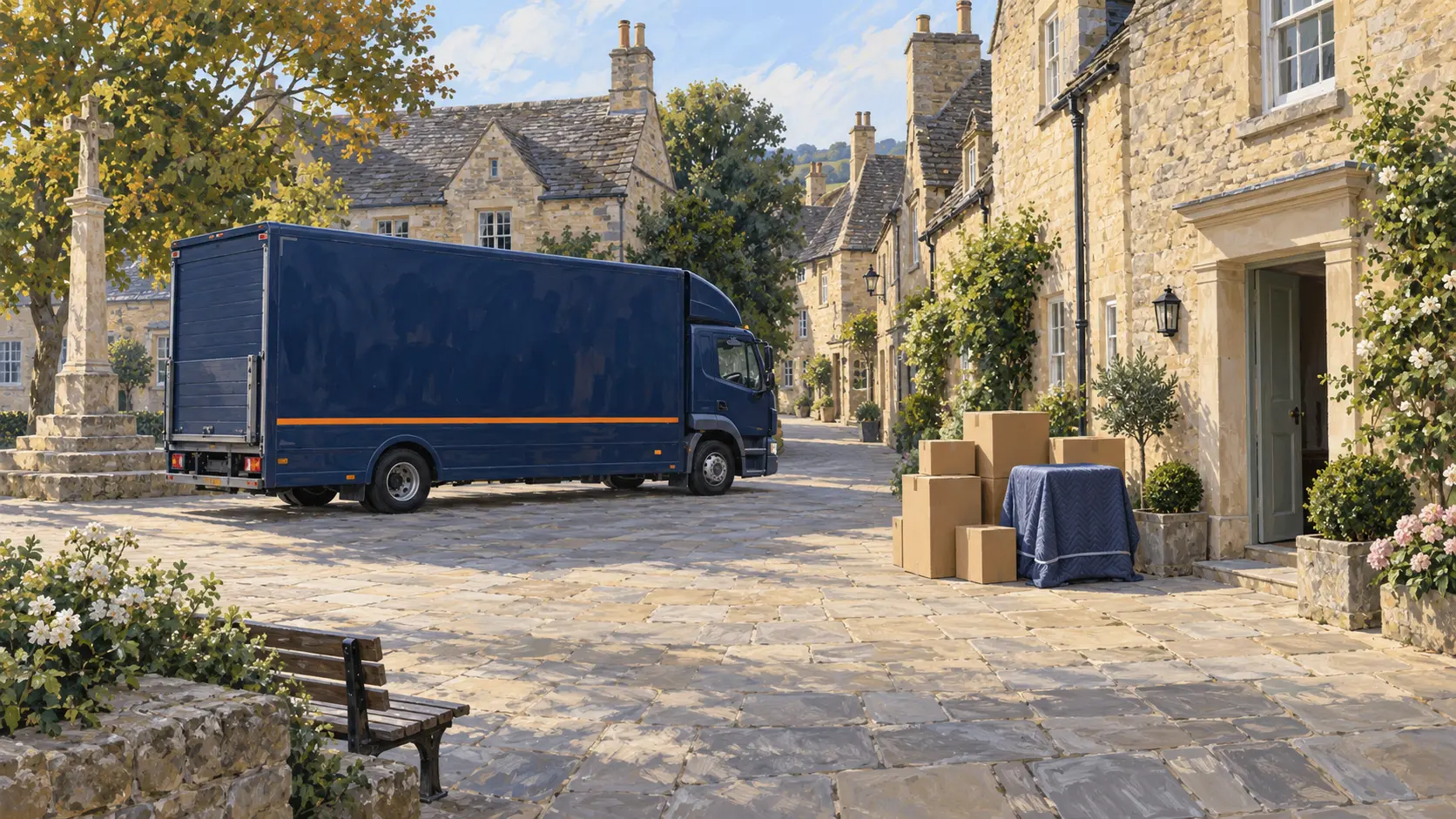
For a Stow-on-the-Wold home, describe the final approach and the carrying route separately. A postcode close to a public car park does not show that a removals vehicle can wait beside the house; give the actual entrance and any turns, steps or gradients.
For room moves, prepare your room inventory, furniture staying behind, shared entrance and floor details. Describe the collection and receiving points separately so the quote can reflect the whole job, including any carrying or handling beyond the vehicle.
Coordinate access with both households
Ask when shared entrances and stairs can be used, and make sure someone can provide keys at each end. Explain any lift booking or restricted loading space. Keep boxes labelled with your name and the destination room so they remain separate from other residents’ belongings. Request carrying help explicitly.
Before you send the room-move enquiry
- Count bags and boxes as well as furniture.
- Give the floor level and any narrow turns at both addresses.
- Identify furniture that will need dismantling before it can leave.
Your Stow-on-the-Wold enquiry checklist
- For room moves, have these details ready: your room inventory; furniture staying behind; shared entrance and floor details.
- Give both full postcodes and the entrance used for the job. Explain whether the Stow-on-the-Wold address has private loading space or needs an agreed street position.
- Explain any unresolved permission, timing or handling question before accepting a quote.
- Check the quote’s supplier, price, inclusions and booking terms before confirming.