
Choose before you pack
Compare beds, sofas, tables and appliances against the space available. Mark duplicate furniture you are selling, storing or leaving behind. The removal inventory should show the final choices, not every item currently owned. Give dimensions of the selected large pieces and identify any dismantling needed.
Plan moving in together around your Stow-on-the-Wold access
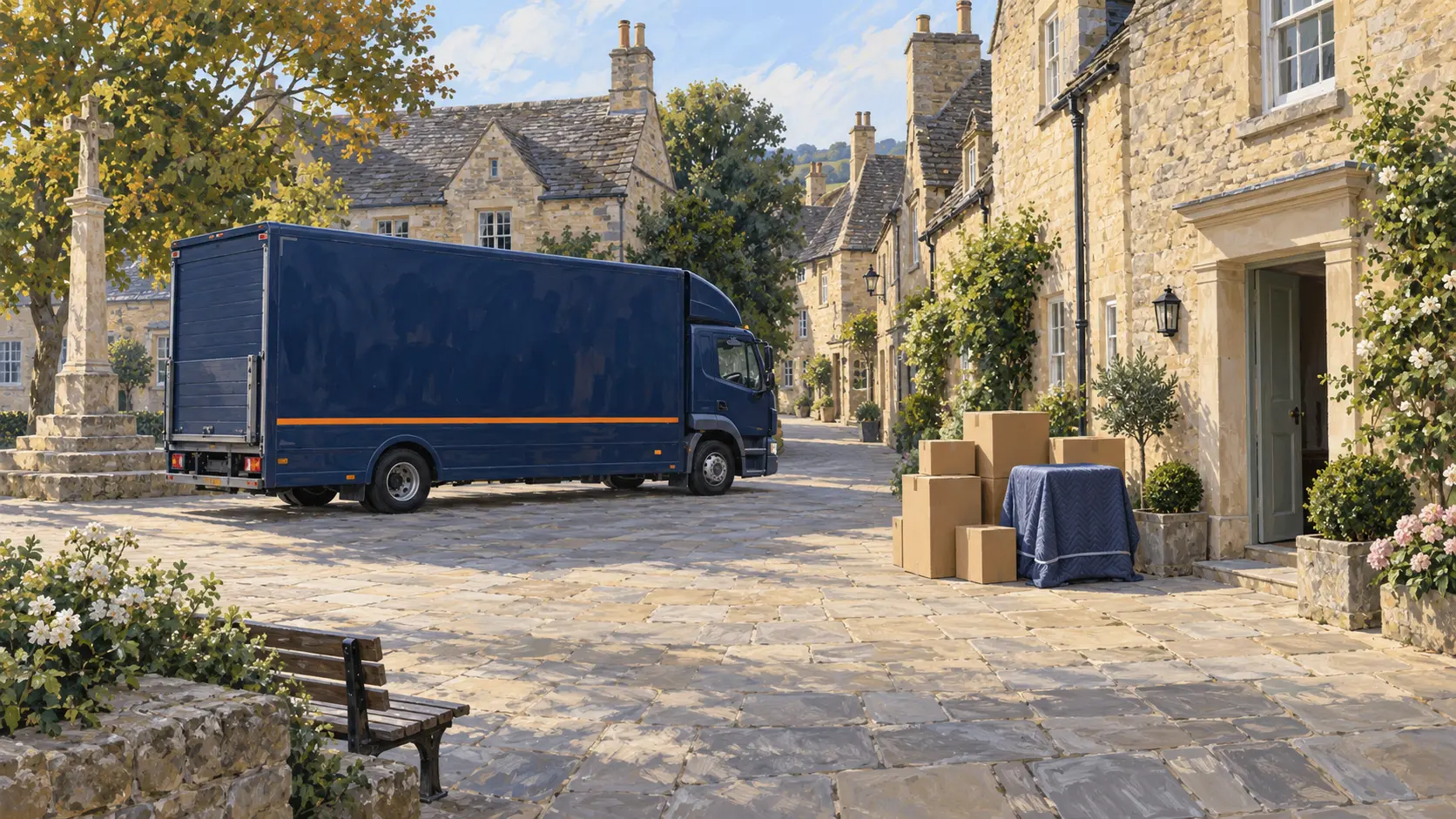
For a Stow-on-the-Wold home, describe the final approach and the carrying route separately. A postcode close to a public car park does not show that a removals vehicle can wait beside the house; give the actual entrance and any turns, steps or gradients.
For moving in together, prepare a keep-list from each home, both collection addresses, space and access at the new home. Describe the collection and receiving points separately so the quote can reflect the whole job, including any carrying or handling beyond the vehicle.
Coordinate two collections and one delivery
List the homes in a proposed sequence with full postcodes and access times. Note different key-return deadlines and who will be present at each collection. Label boxes by final room, while keeping the source home identifiable if needed. Both loads must fit the agreed vehicle plan rather than being treated as unrelated small jobs.
Decisions to make before enquiring
- Which furniture will actually move into the shared home.
- Whether any item needs a separate family or storage destination.
- Who can approve the combined inventory and booking details.
Your Stow-on-the-Wold enquiry checklist
- For moving in together, have these details ready: a keep-list from each home; both collection addresses; space and access at the new home.
- Give both full postcodes and the entrance used for the job. Explain whether the Stow-on-the-Wold address has private loading space or needs an agreed street position.
- Explain any unresolved permission, timing or handling question before accepting a quote.
- Check the quote’s supplier, price, inclusions and booking terms before confirming.