
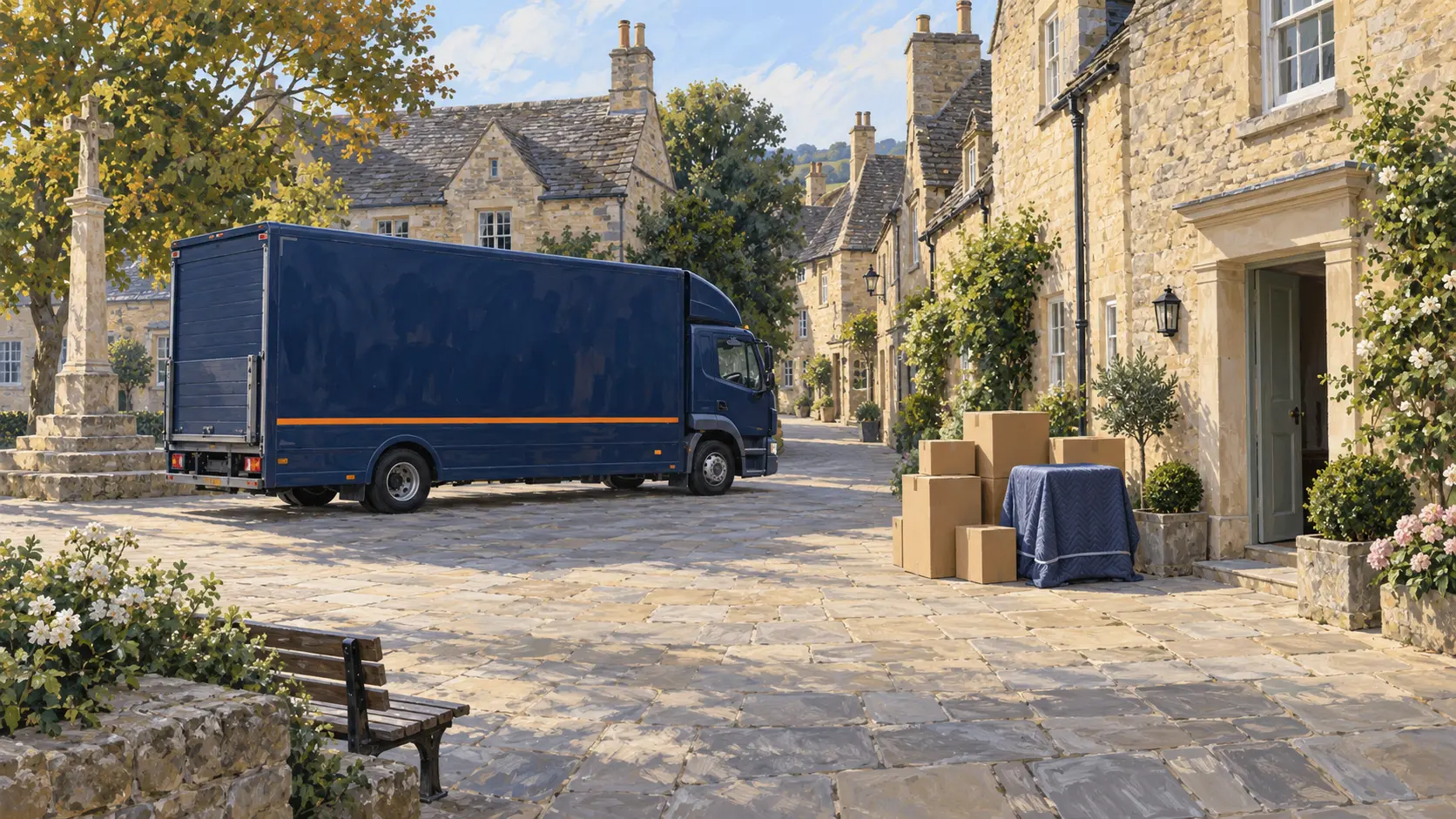
Count the load in categories
Group small, medium and large boxes, then count bags, suitcases and plastic crates separately. Note books or other dense contents, which may need smaller manageable containers. Keep furniture and appliances on separate lines. “Twenty boxes” is less useful if several are oversized or contain unusually heavy objects.
Plan moving box inventory guide around your Stow-on-the-Wold access
Measure turns and changes of level before packing the last items around them. For a Stow-on-the-Wold frontage or side-lane property, separate pieces that may need dismantling and confirm the door-to-vehicle carry before the crew is chosen.
For moving box inventory guide, prepare box quantities by size, heavy contents identified, furniture listed separately. Describe the collection and receiving points separately so the quote can reflect the whole job, including any carrying or handling beyond the vehicle.
Update the estimate as packing progresses
Mark early figures as estimates and tell Movivio if the final count changes materially. Include contents from lofts, garages and shared cupboards. Do not assume extra boxes can be added without affecting capacity or time. Describe items that will remain loose so preparation can be discussed before arrival.
A simple inventory format
- Room name, box size category and estimated quantity.
- Heavy or fragile contents needing attention.
- Loose items and furniture outside the box total.
Your Stow-on-the-Wold enquiry checklist
- For moving box inventory guide, have these details ready: box quantities by size; heavy contents identified; furniture listed separately.
- Give both full postcodes and the entrance used for the job. Explain whether the Stow-on-the-Wold address has private loading space or needs an agreed street position.
- Explain any unresolved permission, timing or handling question before accepting a quote.
- Check the quote’s supplier, price, inclusions and booking terms before confirming.