
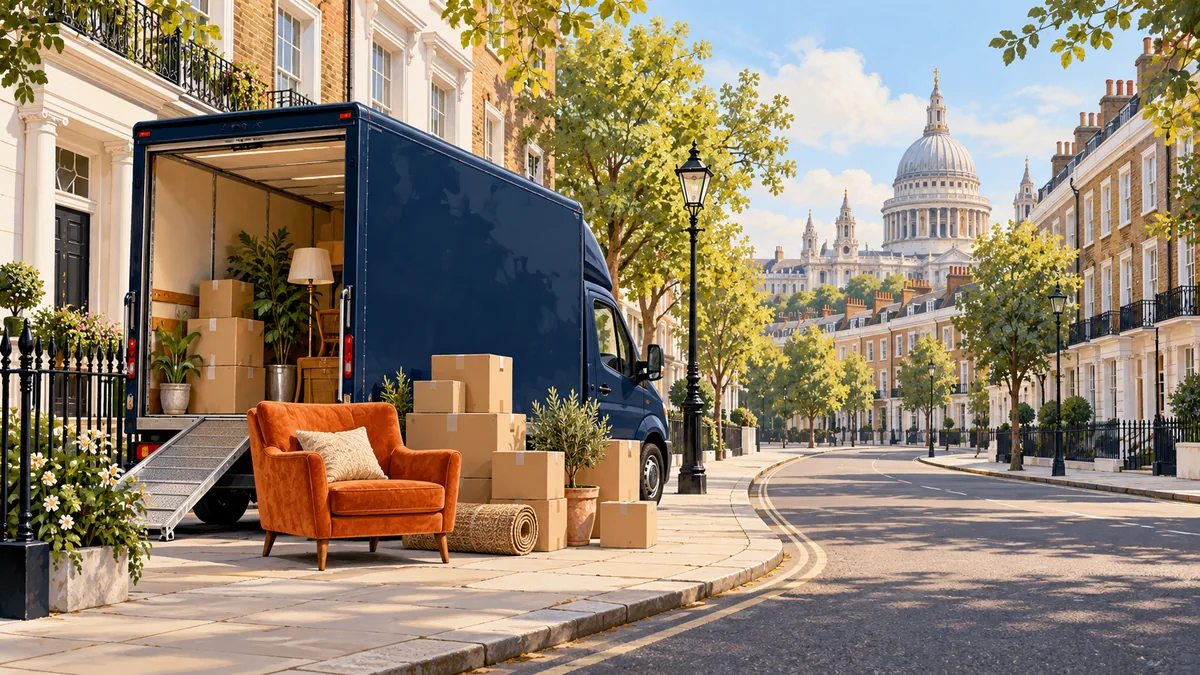
Two-household moves: the London plan
If the move crosses London, keep the key-release time, reserved lift slot and loading window together in the enquiry. Label boxes by destination room so unloading can use the agreed building slot efficiently.
- Separate household inventories: include the details for both ends of this move.
- Destination labels: include the details for both ends of this move.
- One agreed coordination contact: include the details for both ends of this move.
Keep ownership clear throughout the route
Use a simple household name or code on boxes and inventory lines. If both loads go to the same property, also add the destination room. When they go to different addresses, identify exactly which items leave the vehicle first. Do not share private contact details without the people’s permission.
Agree one complete moving scope
Explain which person can approve the route, price and changes. Include floor levels and loading arrangements at all properties, even if one household has only a few items. Conflicting key handovers or access hours may make a combined journey impractical. Availability and the full plan must be agreed rather than assumed.
Provide a numbered route
- Collection one: household, postcode, inventory and available time.
- Collection two: the same details, plus any preparation still required.
- Every delivery: receiving contact, postcode and items assigned to it.
Resolve borough, building and loading bay
A London move needs a borough and full postcode as well as a building name. For a flat, send the floor, lift-door dimensions and any move-in appointment before asking for a vehicle size. A concierge booking and roadside loading permission are separate arrangements.
For this two-household moves request, explain any uncertainty about one agreed coordination contact before accepting a quote. The collection-ready time, vehicle access and recipient availability must work together; a short driving distance does not remove the handling work.
Before you confirm two-household moves
Send the full collection and delivery addresses, separate household inventories and destination labels, and photographs of any awkward access. Ask for a written scope covering the handling required at your London address.
Check the proposed supplier, price, vehicle or crew, relevant cover and any waiting arrangements. Do not release the goods until the booking and handover instructions have been agreed.